From here you can download the CARBON FACTOR.
Here is the report on Carbon Factor, giving also advices in its use.
The Carbon Factor was developed by landscape architect Mari Ariluoma from Aalto University (method development and text), senior researcher Liisa Kulmala from the Finnish Meteorological Institute (simulation of carbon calculator values), and landscape architect Caroline Moinel from Aalto University (tool modification).
You can find the tool in Finnish from here.
Why to use Carbon Factor?
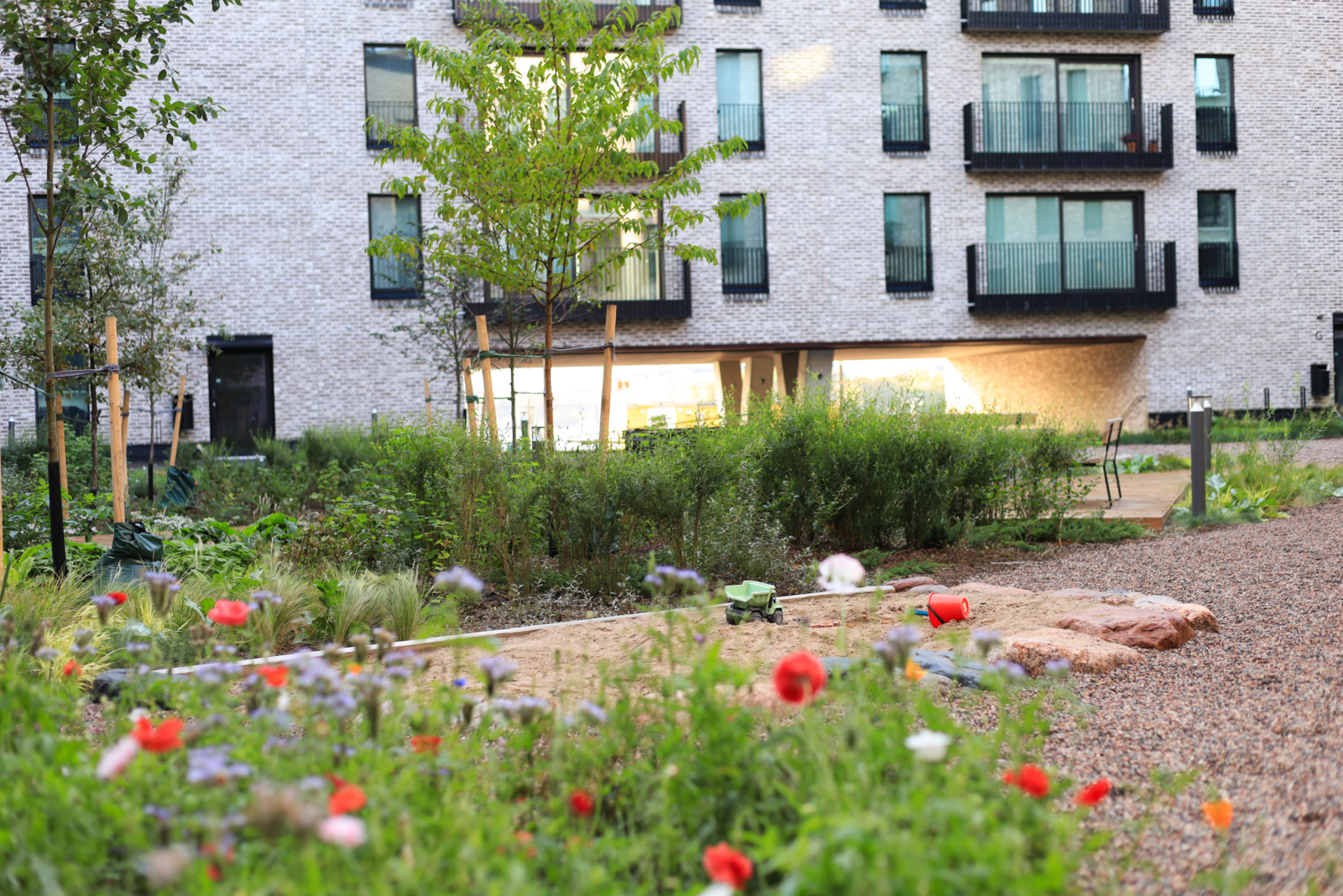
The Carbon Factor allows designers to compare different vegetation solutions and their effects on the carbon sinks of the plot. The assessment can be made during the different phases of the planning, as long as the plot area, vegetation types and their areas are known. The Carbon Factor encourages the selection of sustainable and carbon-wise green construction solutions and complements the Green Factor. In principle, an assessment can also be made for a park design project, for example, but the carbon factor target levels do not apply in this case, as they are defined based on residential blocks.
Although carbon sinks in vegetation and soil are quantitatively small compared to emissions caused by construction, they are the only carbon sinks that can be actively created during construction. This opportunity can be exploited much more than currently. (Hautamäki et al. 2025) The goal of green building should be to at least not increase the total emissions of construction. The intention is not to compensate for construction emissions with carbon sinks from green building, but rather to primarily preserve existing carbon stocks and sinks as much as possible, minimize emissions from green building, and create new carbon sinks whenever possible. Strengthening carbon sequestration is likely to also produce other benefits, such as promoting biodiversity. (Ariluoma et al. 2024).
References:
Ariluoma, M., Kinnunen, A., Lampinen, J., Hautamäki, R., Ottelin, J., 2024. Optimizing the co-benefits of biodiversity and carbon sinks in urban residential yards. Front. Sustain. Cities 6. https://doi.org/10.3389/frsc.2024.1327614
Hautamäki, R., Kulmala, L., Ariluoma, M., Järvi, L. 2025. How urban green infrastructure contributes to carbon neutrality. Buildings & Cities, 6(1), 272–280. https://doi.org/10.5334/bc.586
Kuva: Caroline Moinel